Photos
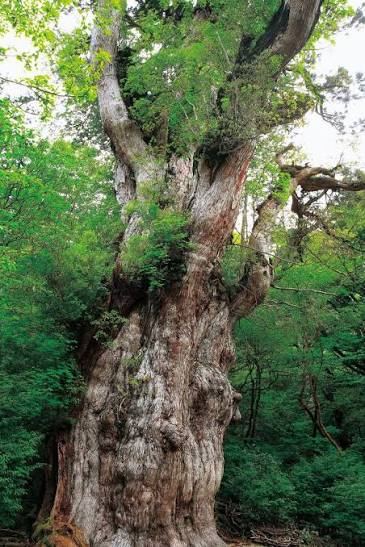
Jomon Sugi itself
The giant, gnarled trunk that has been the subject of so much debate.
The commonly cited figure
Jomon Sugi is a giant tree that stands apart even among Yakushima's famous cedars, with a trunk circumference of 16.4m and a height of 25.3m. Since its discovery in 1966, it has been introduced in countless travel guides and books alongside the figure "7,200 years old," cementing the widespread image of "Japan's oldest tree, alive since the Jomon period." Hikers from Japan and abroad make the round-trip trek of over ten hours just for a single glimpse of it.
A controversy specialists raise
Among specialists in Yakusugi (Yakushima's ancient cedars), the "7,200 years old" figure for Jomon Sugi has long been met with caution. Large old trees like Yakusugi often have hollowed-out cores, which makes it technically difficult to determine age by counting tree rings precisely. Based on estimates from Yakusugi growth rates and dating data from other Yakusugi specimens measured nearby, many specialists favor the view that Jomon Sugi's actual age is more likely in the range of 2,000 to 3,000 years.
| View | Estimated age | Basis |
|---|---|---|
| Widely cited figure | ~7,200 years | An image and popular label established since its discovery |
| Specialist estimate | ~2,000–3,000 years | Estimates based on Yakusugi growth rates and tree-ring data |
Why the figure spread
The name "Jomon Sugi" itself is said to have been coined out of astonishment, at the time of its discovery in the 1960s, at the thought that "this might have been alive since the Jomon period." Once the name took hold, pairing it with the concrete figure of "7,200 years old" only heightened its story value as a tourist destination. This pattern — a compelling name and legend spreading faster than scientific rigor — is common not only on Yakushima but around Japan's various "power spots" and traditions of giant-tree worship.
Not a few guides who actually walk this forest, aware of the controversy, will tell visitors plainly that "the exact age isn't known." Knowing the specialist debate behind the number a guidebook quotes can make walking through Yakushima's forest an even richer experience.
Read about Cranes, Cuisine & Shochu →Photos
The giant, gnarled trunk that has been the subject of so much debate.