Photos
The Heavenly Sakahoko and Sakamoto Ryoma's journey
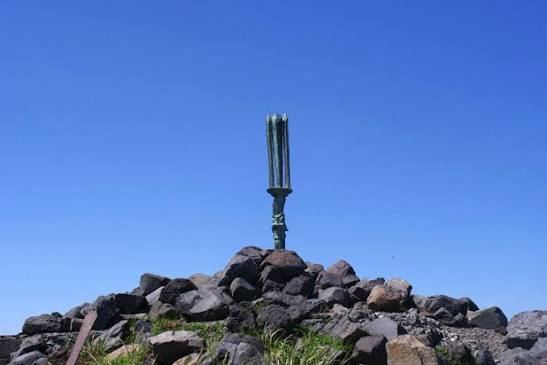
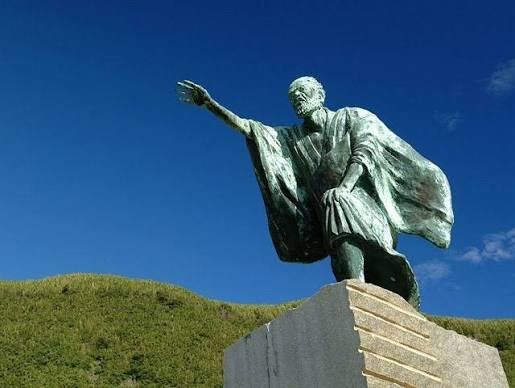
The actual spear standing atop Takachiho-no-mine, and a statue evoking Ryoma.
The myth
In the founding myth told in the Kojiki and Nihon Shoki, Ninigi-no-Mikoto, grandson of the sun goddess Amaterasu, descends from the High Plain of Heaven to earth. One of the peaks said to be that landing site is Takachiho-no-mine, straddling the border with Miyazaki Prefecture (a different place from the similarly-named Takachiho Gorge in Miyazaki's Takachiho Town, with which it's often confused). The Heavenly Sakahoko standing on this peak today is said to have been planted there by Ninigi-no-Mikoto himself, either to mark his rule over the land or to ward off evil spirits.
The heart of the legend
What made the Heavenly Sakahoko famous nationwide was Sakamoto Ryoma, the Bakumatsu-era reformer. After being wounded in the Teradaya Incident, Ryoma traveled to Kirishima with his wife Oryo in 1866 to recuperate — a trip often cited as Japan's first honeymoon. Along the way, legend has it, Ryoma climbed Takachiho-no-mine and pulled the Heavenly Sakahoko out of the ground to see what it was, then put it back.
The basis for this story is a letter Ryoma wrote to his sister Otome, which describes the climb and the spear. But how literally to take that letter — and whether the story grew a tail or two in the retelling — remains debated; even Kirishima City's own tourism materials describe it with careful wording like "is said to have."
Why it's still standing
The spear on the summit today is not simply the original one, untouched since ancient times. It has been damaged and toppled more than once over the years by eruptions, lightning strikes, and weathering, and each time it has been repaired or rebuilt, often by local volunteers. The current spear has fallen before and been re-erected. It may be more accurate to think of it less as "an unchanged relic of myth" and more as "an object of faith the community has kept alive."
Photos
The actual spear standing atop Takachiho-no-mine, and a statue evoking Ryoma.