Photos
Cranes and food culture, in pictures
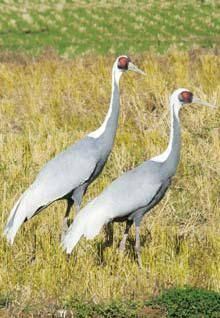
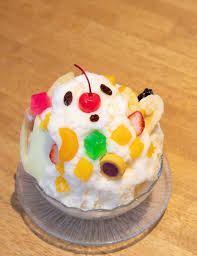
Hooded cranes descending on Izumi, and Kagoshima's famous shirokuma.
The cranes of Izumi
In the vast reclaimed farmland of Izumi City, in the northwest of Kagoshima Prefecture, cranes that have flown thousands of kilometers from Siberia and northeastern China arrive to winter every year from around October through the following March. Their numbers exceed 10,000 annually, making this the world's largest wintering ground for cranes and earning it designation as a Special Natural Monument of Japan. Hooded cranes in particular are remarkable: an estimated 90 percent or so of the entire world's population concentrates on this one plain — an extraordinarily rare degree of concentration for any migratory bird, anywhere in the world.
In the early morning, around Izumi City's Crane Observation Center, visitors can watch thousands of cranes take flight all at once — a popular sight featured in major travel guides, though the sheer abnormality of that "90 percent of the world's hooded cranes" figure is less often discussed in any depth.
A food story for the connoisseur, part 1
Shirokuma ("white bear"), Kagoshima's famous shaved-ice dessert generously drizzled with condensed milk and topped with fruit and sweet beans, is said to have originated at a sweets shop in Kagoshima City not long after the war, and it gained nationwide fame for its adorable look (the arrangement of toppings resembling a polar bear's face). It's now popular enough to have been turned into a packaged product sold at convenience stores nationwide, but the fact that it originated in Kagoshima is, surprisingly, not widely known.
A food story for the connoisseur, part 2
Kagoshima is covered by the Shirasu plateau, a layer of volcanic ash that made the land poorly suited to rice farming. Instead, during the Edo period, the cultivation of sweet potatoes — which grow well even in poor soil — spread widely, and a distinctive shochu culture developed using them as its raw material: the sweet-potato shochu known as imo-jochu. In stark contrast to much of Honshu, where sake culture predominates, in Kagoshima "a drink" means sweet-potato shochu, as a matter of course.
Kagoshima's livestock products, such as Wagyu beef and black pork, are likewise an extension of this combination of volcanic-ash soil and the dry-field farming and animal husbandry that developed in place of rice cultivation. Kagoshima black cattle in particular are known as a brand renowned nationwide for the scale of their production. Much of Kagoshima's food culture, like its Sakurajima daikon and komikan, can be said to have grown out of finding ways to make peace with this ash-covered land.
In closing
From the smoke rising off Sakurajima, to the earth-scale calamity of the Kikai Caldera, the myth of the Descent of the Grandson, masked visiting deities surviving on remote islands, and a food culture built around sweet-potato shochu — Kagoshima is a place that can never be fully captured by the image of a "southern paradise" alone. It holds nature on an extraordinary scale, and stories rooted deep in that land. We hope the rooms introduced on this site give you something to look forward to on your next visit to Kagoshima.
Back to top →Photos
Hooded cranes descending on Izumi, and Kagoshima's famous shirokuma.