Photos
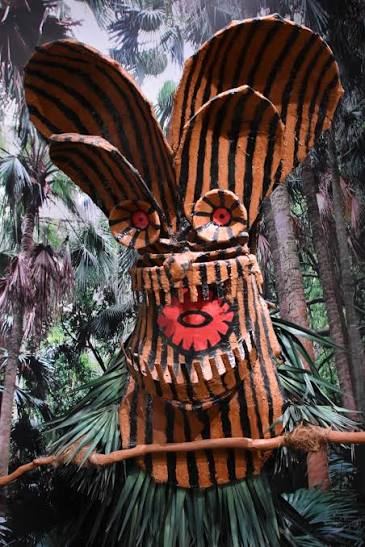
The mask of Boze
An otherworldly visiting deity made from cycad leaves and primary colors.
What the festival looks like
On the evening of the final day of the old-calendar Bon festival, the settlement on Akuseki Island rings out with a signal drum known as the "Boze-daiko," and three young men from the village, dressed as Boze, slowly emerge from the mountainside. They wear grotesque masks made of cycad leaves and tree bark, cover their bodies in plant fiber and mud, and paint their faces in red, white, and black, with jutting eyes and mouths. In their hands they carry sticks smeared with red mud called "Boze-mara," which they press against people to smear them with mud — an act believed to ward off misfortune.
The common interpretation is that Boze appears to send the spirits of ancestors — who were welcomed back by bonfires — back to the other world. Children flee in fear as Boze chases them down and smears them with mud, a ritual believed to bring good health and freedom from illness. It's an eccentric festival, passed down across generations within the kind of tight-knit community found only on a remote island.
A topic scholars enjoy debating
Boze's grotesque masks, with their design unlike anything else among Japan's visiting deities, often come up in folklore and cultural-anthropology circles. One frequently cited observation is that the masks share formal similarities with spirit masks found in parts of Papua New Guinea — the full-body costumes of plant fiber and the simple, primary-color face painting are seen as suggestive of a continuity with mask traditions from the south.
In recent years, Akuseki Island has occasionally suspended tourist visits due to earthquake swarms, but tours allowing visitors to observe Boze — run with the cooperation of local residents — have resumed each time conditions settle down. The very difficulty of getting there is part of what keeps this festival a hidden gem known only to those in the know.
Next up
Kagoshima Prefecture is home to another visiting-deity tradition, also inscribed on UNESCO's Intangible Cultural Heritage list alongside Boze, on yet another remote island. We introduce Toshidon, of Koshikijima, who appears only on New Year's Eve.
Read about Toshidon of Koshikijima →Photos
An otherworldly visiting deity made from cycad leaves and primary colors.